Every health crisis always results in a pandemic of disinformation.
In the 1980s to 2000s, we witnessed the spread of lies about AIDS. For example: the HIV virus was created in a government laboratory, or the theory that HIV / AIDS can be cured with goat's milk. These claims increase risk behavior and worsen the crisis.
Now we also see a flood of false news about the corona virus pandemic.
From Facebook to WhatsApp messages, we often find misinformation covering the causes of the outbreak to how to prevent it. These false news can bring their own losses. For example there was a report from a province in Iran that said many people died after drinking alcohol, based on claims that this could protect themselves from Covid-19.
False news of this kind can give a false sense of security and leave us ignorant of government guidance, thus eroding trust in health workers. There is evidence that the ideas embodied in the false news stick in our minds.
A survey from YouGov and The Economist in March 2020 showed that 13% of Americans believe that Covid-19 is a hoax, while 49% believe that this pandemic is actually man-made. One more thing: many educated people, including those who believe in such things.
See for example author Kelly Brogan, a person who believes in conspiracy theories surrounding Covid-19. Kelly graduated from the Massachusetts Institute of Technology and studied psychiatry at Cornell University. But he ignored evidence of the dangers of the virus that had already occurred in China and Italy. He even questioned scientific theories while promoting false scientific ideas to explain this virus.
Even some world leaders - who are expected to have better judgment on rumors - have contributed to spreading misinformation about the risk of this disease and promoting unproven drugs, the effects of which have made matters worse. Psychologists have studied this phenomenon and suggested a number of things to protect themselves from the lies and misinformation of this information.
Information overflow
The problem starts with the nature of these messages themselves. We get information every day, and often rely on intuition to determine whether something is true or not. These spreaders of false information can make their news feel "right" through simple tricks that make us not think critically.
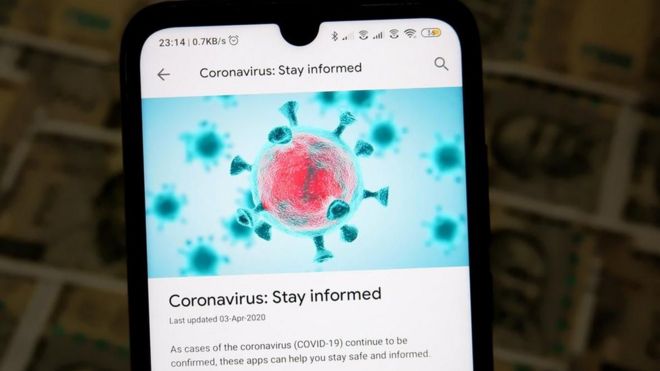
Eryn Newman from Australian National University, showed that photographs that accompany certain statements will increase confidence in the accuracy of these statements, even though the photos are almost unrelated.
A generic photo of the virus that accompanies claims about a new treatment method will certainly not prove the truth of the claim, but help us visualize it. So this "smooth processing" makes us think that the news is true.
For similar reasons, false information can also include descriptive language and personal stories. Sometimes facts or figures - or well-known health institutions - are displayed to make the lie convincing because it is related to the knowledge we already have.
Simple statements that are repeated, both with the same text or modified, can increase the "truth" through increasing familiarity with the information. Then we often mistake it for factual truth.
So the more we see something in our news supply, the more often we consider it true even though we were initially skeptical of it.
Share before thinking
This ruse has long been understood by propaganda experts and spreaders of false information, and social media exacerbates this tendency. Recent evidence shows that many people spread content without thinking about its accuracy.
Gordon Pennycook, a misinformation psychology researcher from the University of Regina, Canada, conducted the study. He found that his study participants could recognize fake news by 25%. When asked whether they would disseminate the information, 35% of participants answered that they would disseminate it.
"This shows people will share information that, if they think carefully, they know that the information is wrong," Pennycook said.
People seem to think more about the possibility that their upload will be able to ‘like’ or ‘retweet’ rather than think about the accuracy of the upload. "Social media does not provide incentives for truth," Pennycook said. "He gives incentives to involvement".
Or maybe people think they can transfer the responsibility of assessment to someone else. Many share false information with the announcement in front, "I don't know whether this is true or not ...".
Perhaps this is based on the intention: who knows the information is true and will help friends and followers, and when it is not true, is considered not harmful.
Thoughts like this encourage people to share without realizing that misinformation can be harmful too.
Fake news content - whether it is a new drug or a theory that the government is hiding something - promises a strong response from followers on social media. This distracts people from the most important thing: is the information accurate?
Ignore response
Classical psychology research shows that some people are very good at ignoring their deep responses. People like this are usually easier to eat fake news.
Researchers like Pennycook use a tool called "cognitive reflection test" or CRT to measure this tendency. To understand how it works, see the following question:
Emily's father has three children. The two are named April and May. What is the name of the third child?
Many intuitively answered June. But of course the correct answer is Emily.
To arrive at the correct answer, we need to pause and beat the intuitive response.
CRT questions are a test of one's inclination: whether he will use reason to think things analytically rather than obey intuition.
People who don't use reason are often referred to by psychologists as "cognitive miser" because they have reason but don't use it much.
This cognitive stinginess makes it easier for us to experience cognitive biases, and this changes the way we consume information (and misinformation).
In the matter of statements about the corona virus, Pennycook found that people who scored low on CRTs did not consider the accuracy of a statement, which they could voluntarily spread.
Stop spreading
Memahami bahwa orang – bahkan yang pintar dan terdidik – kerap “kikir” dalam menggunakan akal, bisa membantu kita untuk menghentikan misinformasi.
Mengingat juga bahwa “kebenaran” bekerja saat pikiran kita mengalir dengan lancar, maka pihak yang berupaya menyanggah informasi harus menghindar cara penyajian yang rumit.
Fakta harus disajikan sesederhana mungkin dengan bantuan gambar dan grafis yang membuat ide lebih mudah divisualisasi.
Menurut Matthew Stanley dari Duke University, “kita butuh komunikasi dan strategi yang efektif untuk mengarah kepada orang-orang yang tak ingin merenung dan berpikir panjang”.
Kampanye menyanggah mitos harus menghindari penyebutan mitos yang ingin dibantahnya. Pengulangan membuat mitos itu jadi semakin akrab, malah meningkatkan persepsi bahwa mitos benar adanya.
Terkait perilaku dengan media sosial, kita mungkin perlu mencoba untuk tidak terlibat secara emosional dengan unggahan yang kita lihat.
Lalu mau berpikir tentang fakta dibalik unggahan itu sebelum ikut membagikannya. Apakah dasarnya omongan orang, atau ada dasar ilmiahnya? Bisakah faktanya ditarik hingga ke sumber awalnya? Dan seterusnya. 'Just the common cold': Controversial statements about the corona virus from world leaders
This is a question that should be asked, rather than thinking of collecting ‘likes’ or thoughts ‘intent to help people’. There is evidence that such thinking can be practiced. Pennycook advises social media companies to intervene directly so that users think more. In his experiments, he found that by asking users to judge the accuracy of the facts of a statement, they began to think more critically about other statements.As a result, they weighed twice as much information before sharing it.
Practically it can be very simple: social media provides automatic reminders so users can think twice before sharing. Indeed there is no one effective medicine to overcome this all.As with our efforts to put a halt to this virus, we need a diverse approach to counter the spread of harmful and dangerous misinformation.

Tidak ada komentar:
Posting Komentar